
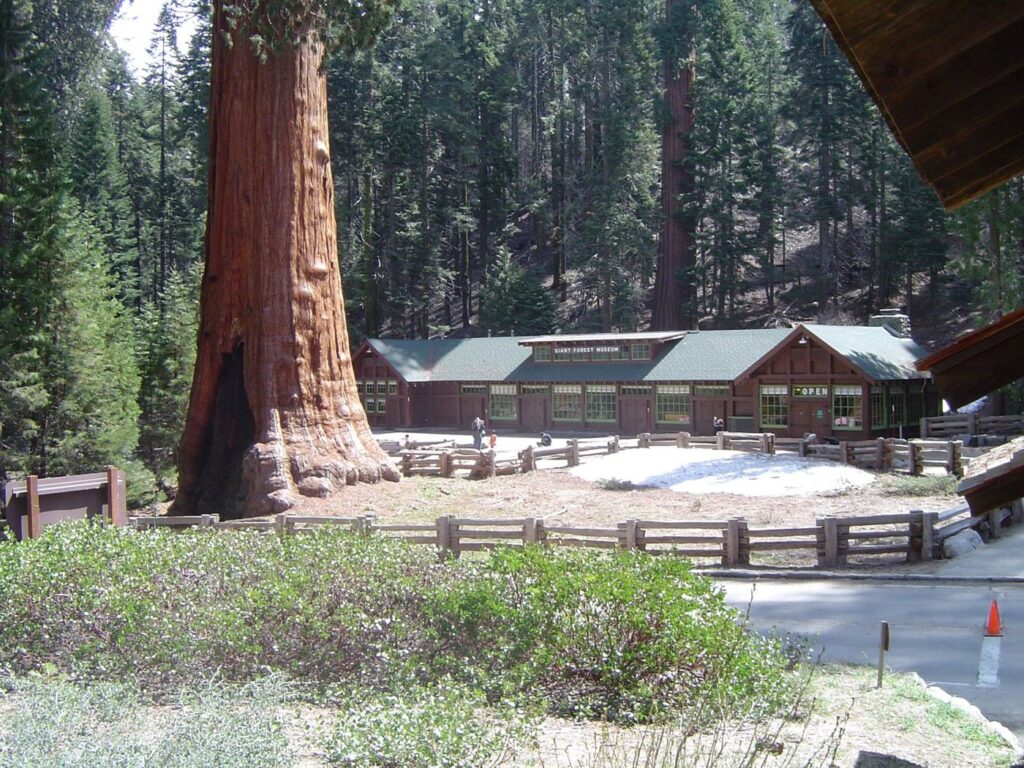
In the mountains of California grow trees so large that a single one can weigh more than a dozen blue whales. The giant sequoia is the largest living thing on Earth by volume, with trunks more than eight metres across and branches as thick as ordinary trees. Some are more than three thousand years old, having sprouted when the pyramids were new, and they have survived droughts, storms and centuries of lightning strikes. Their bark, up to half a metre thick, protects them from fire, and they depend on fire: the heat of a wildfire opens their cones and releases the seeds, and the ash clears the ground for seedlings. A mature sequoia can produce hundreds of thousands of seeds in a year, yet only a few will grow into trees.
What the Evidence Shows
The sequoias are now under threat from the very fires they depend on. A century of putting out every fire allowed dead wood to pile up, and the warming climate has made fires hotter and more destructive, killing trees that had survived for millennia. In recent years, some of the most famous groves have been wrapped in fire-resistant blankets and doused with sprinklers as flames approached. Conservationists are now setting controlled fires to clear the undergrowth, returning to the natural cycle the trees evolved with. Scientists say the sequoias can survive if the forests around them are managed, but they warn that the trees grow in a narrow range of mountains and have nowhere to go if the climate changes too fast. Reporting and analysis from sources such as NASA track the same developments, and specialists following the giant sequoia trees say the direction is now consistent across independent lines of evidence.
The Wider Context
Funding bodies are watching the giant sequoia trees closely because the work sits at the junction of basic curiosity and practical return. Grant panels increasingly ask for a path from discovery to application, while researchers push back that the most valuable uses of fundamental science are rarely the ones written into the original proposal. The tension is productive when both sides stay honest about timescales.
What Happens Next
The long view on the giant sequoia trees is that fields advance by accumulation rather than by single announcements. This result adds a solid, checkable piece to a structure many teams are building, and its authors have shared their data so the piece can be tested from every side. That is how the picture eventually becomes reliable enough to act on. You can follow related developments in our coverage of science.
It is also worth remembering how quickly the picture in this area has changed before. Positions that looked settled a few years ago have been revised as new data arrived, and the same humility is appropriate now. The strongest coverage of this subject, and the most useful advice, tends to come from sources that update their views openly when the facts move, rather than defending an earlier position long after it has stopped fitting the evidence available.
