
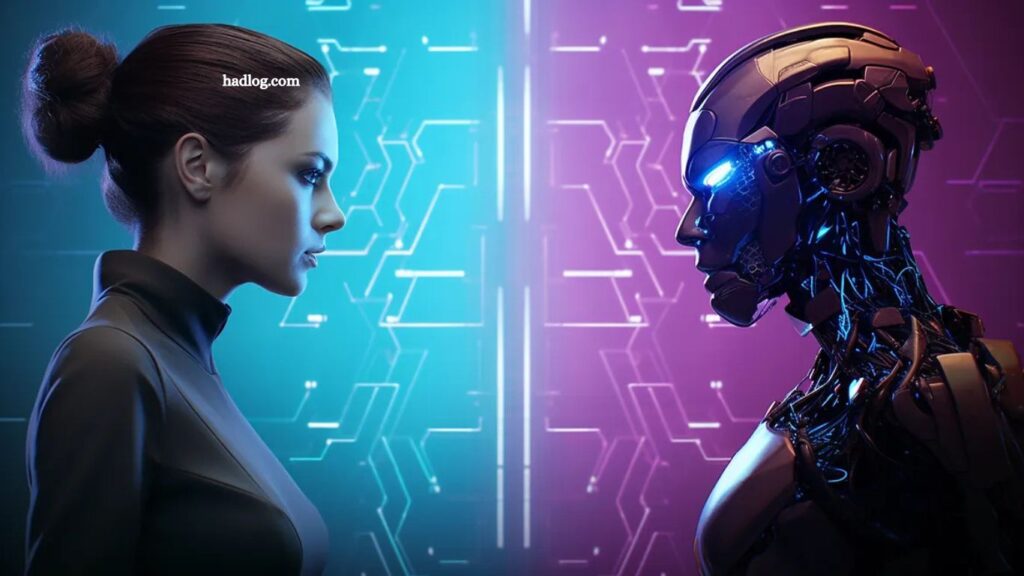
AI-powered app builders like Lovable, Bubble, and Builder.ai let startups create apps faster, cheaper, and without coding. Using no-code and low-code platforms, you simply drag, drop, and let AI handle the rest.
The numbers are compelling. The no-code market is projected to grow from $12.17 billion in 2020 to $68 billion by 2030, and by 2025, 70% of new business apps will use low-code or no-code tools. AI promises speed, affordability, and accessibility, generating apps in minutes without expensive developers.
However, AI-built apps often struggle to scale. Many lack security, flexibility, and deep customization, forcing companies to rebuild when they encounter real-world challenges. Launching an AI-generated MVP may seem fast, but it can fail under real users, data, or growth demands.
So, can AI truly replace human developers, or could over-reliance cost your startup more in the long run? Let’s explore the trade-offs.
Where AI Excels in Software Development
AI brings clear advantages in software development. It’s fast, efficient, and excels at automating repetitive tasks. However, speed and automation don’t mean it can fully replace human developers.
Here’s a closer look at the areas where AI truly shines in building software.
Read More: Meta Edits App: Revolutionizing Video Editing for Creators
AI Speeds Up Code Generation
AI can generate working prototypes in minutes, making it ideal for startups testing ideas. This is particularly valuable for creating Minimum Viable Products (MVPs), allowing businesses to validate concepts quickly before committing to full-scale development.
However, speed doesn’t always mean reliability. AI-generated code can be fast, but it often lacks the precision and robustness that human developers provide.
Ideal for Basic Applications
AI excels at building simple apps that don’t require complex logic or deep customization, such as:
- Internal tools for tracking data
- Landing pages for marketing campaigns
- Basic mobile apps like to-do lists or reservation systems
For these projects, AI outpaces human developers in speed and efficiency. However, when apps need to scale, handle high traffic, or integrate with other systems, AI often falls short.
AI Automates Repetitive Tasks for Developers
AI excels at reducing manual work. Tools like GitHub Copilot and OpenAI Codex suggest code snippets, detect bugs, and automate repetitive tasks, speeding up development and easing the workload on human programmers.
McKinsey reports that AI-assisted development can boost productivity by up to 50%. However, faster development doesn’t always equal better software. AI lacks the understanding of business needs, security considerations, and creative problem-solving that human developers provide.
Is AI Enough for Building Your App?
AI is a powerful assistant—it can write code, automate tasks, and build simple apps quickly. However, in the AI vs Human Developers debate, AI remains a tool, not a full replacement.
Relying solely on AI for your MVP may save time initially, but human expertise is essential to ensure your app is secure, scalable, and production-ready. Next, let’s explore the key limitations of AI in software development.
Where AI-Generated Apps Fall Short

AI can build apps quickly, but speed doesn’t guarantee success. In the AI vs Human Developers debate, AI-built apps often have critical limitations that can cost businesses time, money, and credibility.
Here’s a closer look at the main weaknesses of AI-generated apps.
Limited Customization
AI app builders rely on templates, producing apps that follow preset designs and generic logic. While sufficient for simple projects, this approach falls short for businesses needing custom features, complex workflows, or deep integrations.
For example, an AI-generated e-commerce store may function, but it often lacks:
- Personalized product recommendations
- Custom checkout experiences to boost conversions
- Seamless integration with advanced marketing tools
Without these capabilities, AI-built apps can feel generic and struggle to stay competitive.
Scalability Challenges
AI-built apps work well for MVPs, but they often struggle as user demand grows. Many startups launch AI-generated platforms only to hit performance bottlenecks—slow load times, crashes, and data issues—forcing costly rebuilds.
These apps typically lack proper database management, load balancing, and infrastructure planning—critical elements that human developers design to ensure scalability and long-term reliability.
Security and Compliance Risks
AI-generated apps often fall short on security. Code produced by AI isn’t optimized for best practices, leaving vulnerabilities that cyberattacks can exploit. Regulatory compliance—such as GDPR, HIPAA, or SOC2—is another challenge, putting businesses at legal and financial risk.
A 2023 Synopsys report found that 83% of AI-generated code contains security weaknesses. For example, a fintech startup using an AI builder experienced a major data breach due to weak authentication, exposing thousands of customer records.
Human developers, by contrast, proactively address security and compliance, reducing risk while building robust, scalable systems.
Limited Debugging and Optimization
AI can generate code quickly, but it lacks the critical thinking needed for effective debugging and optimization. When issues arise, human intervention is essential, especially in complex or poorly documented codebases.
Relying on humans to troubleshoot AI-generated apps diminishes their efficiency. Without expert oversight, maintaining, improving, and scaling these applications becomes a major challenge.
Limited Integration Capabilities
AI app builders often struggle with complex integrations, such as connecting to APIs, legacy systems, or enterprise infrastructures. This limits the app’s ability to communicate with other software, creating inefficiencies and data silos.
For instance, a healthcare company faced difficulties linking its AI-built system to hospital databases, causing operational bottlenecks. Solutions like Maxiom combine industry expertise with seamless integration, ensuring AI-driven applications work reliably within existing systems.
The Value of Human Developers: Expertise and Innovation

In the AI vs Human Developers debate, human expertise remains crucial. While AI boosts efficiency and automates tasks, human developers bring problem-solving skills, creativity, and strategic thinking that machines cannot replicate.
Here’s a closer look at the areas where human developers truly add value:
Real-World Experience and Problem-Solving
Human developers excel at analyzing complex problems, devising creative solutions, and executing them efficiently. They understand edge cases, user experience (UX) design, and unique business needs—allowing them to adapt and innovate beyond the patterns AI follows.
When unexpected challenges arise or projects require unique solutions, human developers are far better equipped than AI to navigate complexity. Their critical thinking and adaptability make them indispensable in software development.
Custom Architecture and Scalability
Unlike AI-generated code, which tends to be generic, human developers design tailored systems that align with a company’s goals and growth strategy. Custom architecture is key for scalability, enabling businesses to expand operations seamlessly.
For example, companies like Uber use microservices architecture to scale efficiently while innovating rapidly. By breaking monolithic applications into independent services, they handle massive traffic spikes without compromising performance.
Generic AI-generated code cannot match this level of flexibility and scalability—human expertise is essential for supporting dynamic business growth.
Security Expertise and Compliance Knowledge
Human developers are essential for protecting software against cyber threats and ensuring regulatory compliance.
- Proactive Cybersecurity: Developers implement robust security protocols, design secure architectures, follow best coding practices, and conduct rigorous testing to identify and mitigate vulnerabilities. This proactive approach safeguards the confidentiality, integrity, and availability of software systems.
- Regulatory Compliance: Human expertise is crucial for navigating standards like GDPR, HIPAA, and PCI DSS. Developers ensure applications meet these requirements, avoiding legal risks and building user trust—for example, implementing strict data protection measures to comply with GDPR.
Advanced Debugging, Testing, and Optimization
While AI can generate code, debugging, testing, and optimization remain primarily human tasks.
- Debugging: Developers spend a significant portion of their time—up to 75% in some cases—identifying and fixing issues. Their deep understanding of the codebase and critical thinking allow them to trace errors, interpret messages, and resolve complex problems that AI cannot handle autonomously.
- Continuous Optimization: Human developers also optimize code for performance, scalability, and maintainability. They refactor code, improve algorithms, and enhance user experience, applying judgment and creativity that AI cannot replicate.
Innovating Beyond AI’s Limits
Human developers drive innovation through creativity and the ability to think beyond existing paradigms. Unlike AI, which relies on pre-trained data and patterns, humans can conceptualize novel ideas, create new technologies, and adapt to emerging trends and user needs.
The development of advanced AI models, like ChatGPT, highlights human ingenuity—these tools were designed and implemented by developers who envisioned entirely new solutions for language processing.
In the AI vs Human Developers debate, human expertise remains indispensable. Developers ensure applications are secure, compliant, thoroughly tested, optimized, and continuously innovated. While AI is a valuable tool, the strategic and creative roles of humans are essential for high-quality, scalable software.
When building software that’s secure, compliant, and innovative, human developers remain the most reliable choice.
Why Choose Maxiom Technology for MVP Development?
In the AI vs Human Developers debate, businesses need more than AI-generated apps—they need scalable, secure, and innovative solutions. Maxiom Technology delivers production-ready software designed to grow with your business, combining advanced technology with human expertise to ensure lasting impact.
Proven Expertise in Scalable Software Development
For over 20 years, Maxiom Technology has led in custom software development, delivering solutions that perform and scale under real-world demands. We’ve partnered with startups, enterprises, and everything in between, crafting software that grows with our clients’ needs.
Recognized on the Inc. 5000 list as one of the fastest-growing companies, Maxiom Technology demonstrates a proven track record of trusted, high-quality software delivery. Why rely on a one-size-fits-all AI template when you can have decades of expert guidance?
AI-Augmented, Human-Led Development
At Maxiom Technology, AI enhances efficiency—but humans lead the process. AI automates repetitive coding tasks, while strategy, problem-solving, and innovation remain in the hands of our experts.
For example, developing a healthcare app requires strict HIPAA compliance. AI can create a basic structure, but only human developers can ensure legal compliance, protect patient data, and achieve seamless system integration. Our team fine-tunes every detail to deliver secure, production-ready software.
Tailored Solutions That Scale With Your Business
Startups evolve, and your software should too. AI-generated apps often fall short when custom workflows, integrations, or advanced features are needed. At Maxiom, we build software from the ground up, ensuring it adapts and scales with your growth.
Whether it’s custom payment processing, integrating machine learning models, or supporting millions of users, we design solutions to meet your needs from day one.
A Dedicated Team of Experts—Beyond AI Code
At Maxiom, you get more than developers—you get a full team of experts:
- Full-Stack Engineers: front-end, back-end, and databases
- UX/UI Designers: creating apps that are functional and user-friendly
- Cybersecurity Engineers: ensuring robust, non-negotiable security
- Cloud Architects: managing scaling, traffic, and infrastructure
And any other specialists needed for your project
For example, a startup approached us with a half-built AI-generated app struggling under moderate traffic. Our team rebuilt the backend, making it 10x faster and fully scalable—helping them secure major investor funding.
Build Smarter with Maxiom Technology
AI has its place, but when it comes to software that lasts, scales, and performs, human expertise is unmatched.
Don’t settle for a template-generated app that may fail under pressure. Partner with Maxiom Technology, where we combine AI efficiency with real human skill to deliver production-ready MVPs built to succeed.
Ready to create a scalable, secure, and innovative MVP? Contact us today.
Frequently Asked Questions
Can AI fully replace human developers?
No. AI can automate tasks and generate basic code, but human expertise is essential for scalability, security, and innovation.
What types of apps are best suited for AI development?
Simple apps, MVPs, internal tools, or landing pages work well with AI, but complex, scalable, or highly customized apps require human developers.
How does AI speed up MVP development?
AI can generate code, automate repetitive tasks, and build prototypes quickly, helping startups validate ideas faster and reduce initial costs.
What are the risks of relying solely on AI for app development?
AI-generated apps may face scalability issues, limited customization, security vulnerabilities, integration challenges, and difficulty in debugging or optimization.
Why is human expertise important in software development?
Human developers provide problem-solving, innovation, regulatory compliance, security, and code optimization—areas where AI cannot fully replace humans.
Can AI and human developers work together effectively?
Yes. AI can enhance efficiency and automate routine tasks, while humans handle strategy, architecture, security, and creative problem-solving.
Why choose Maxiom Technology for MVP development?
Maxiom combines AI efficiency with human expertise to deliver secure, scalable, and production-ready apps tailored to business needs.
Conclusion
AI can accelerate development, automate repetitive tasks, and generate basic apps, making it a valuable tool for startups. However, when it comes to building scalable, secure, and innovative software, human developers remain irreplaceable.
The ideal approach combines AI efficiency with human expertise: AI handles routine tasks, while skilled developers ensure customization, compliance, performance, and long-term success.
